Two quotes can both say frameless shower door while one covers a single hinged door and the other covers a door, fixed panels and removal of your old enclosure. Here is how to tell them apart.
Start with what the installed proposal actually covers
Two quotes for a frameless shower door are only comparable when they describe the same enclosure and the same work. One price might cover a single hinged door. Another might cover a door plus fixed panels, different glass and removal of your old enclosure. Until those details match, the lower number is not necessarily the better deal.
Retail listings show how far apart products can be. One shopping result describes a sliding door for an opening 56 to 60 inches wide and 76 inches high, with 5/16-inch clear glass. That is a fixed size and thickness, different from the 3/8-inch and 1/2-inch glass we list, and the listing says nothing about installation or whether it suits your bathroom. A custom enclosure works the other way around: the installer measures your opening and the glass is made to fit it. That is not automatically the more expensive route, but it is a different thing to price.
Star Glass LLC installs frameless shower doors in Summit, and custom measuring and installation are part of that service. Whether your home is near Summit Free Public Library on Maple Street or elsewhere in town, each proposal you collect should be based on your own shower, measured and assessed.
To line proposals up fairly, check four things. Layout is how the door opens and how much glass encloses the shower. Glass is the type and thickness specified. Hardware covers the hinges, handles and other fittings, plus their finish. Installation scope is what work the total includes and what it leaves out.
Compare layouts around how you want to use the shower
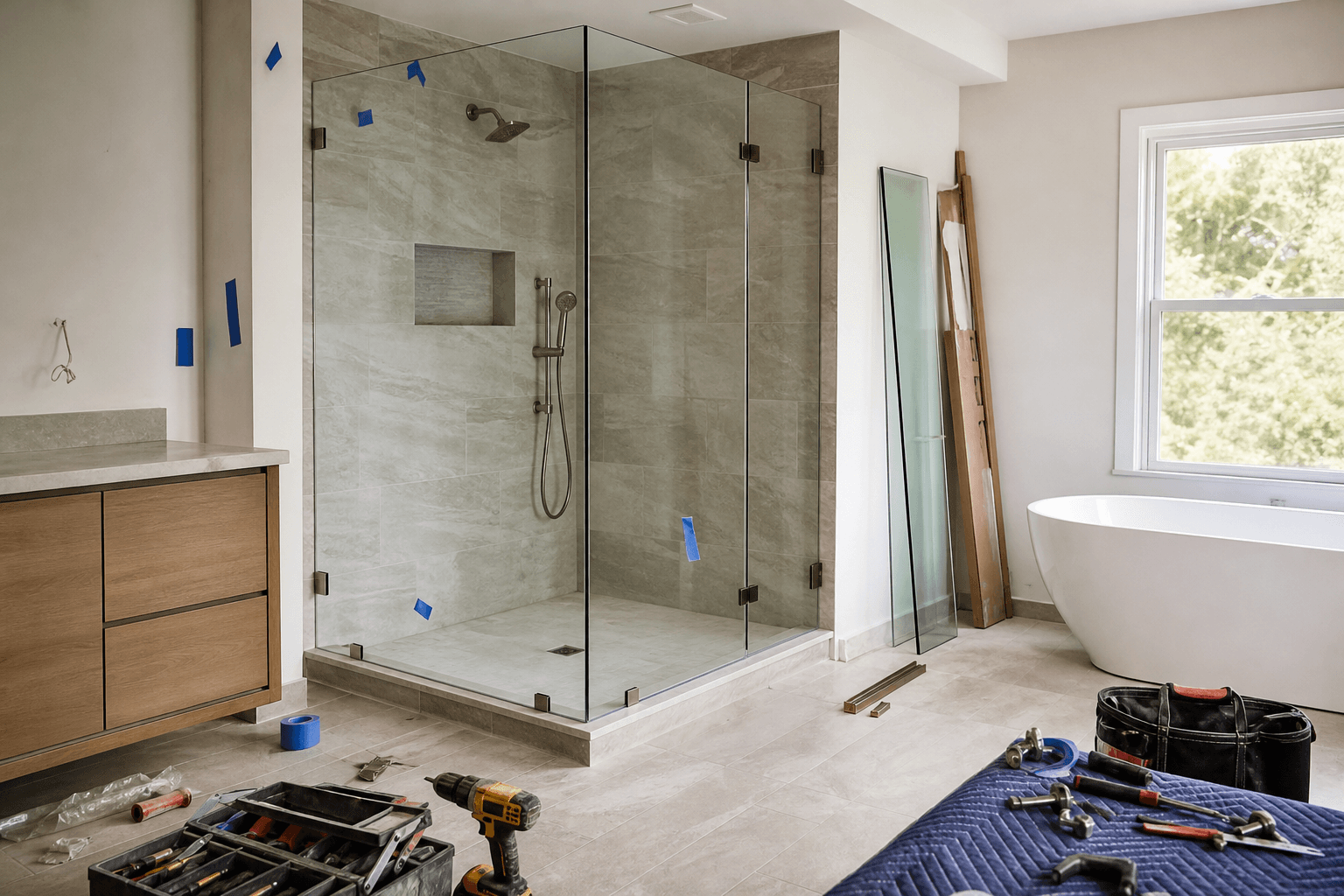
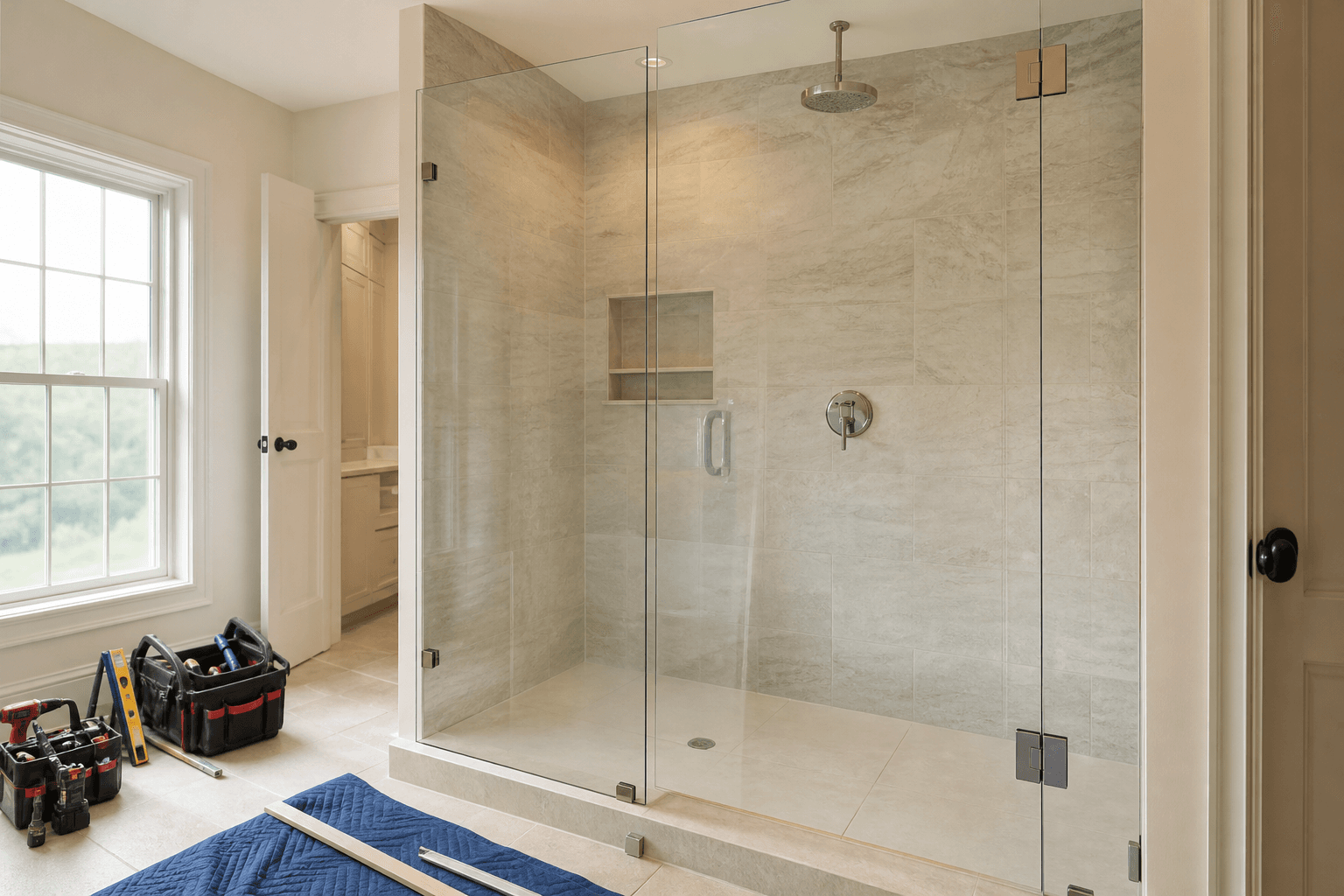
Begin with how you want to step into the shower and how much of it you want enclosed in glass. We build custom swing, sliding and corner enclosures, and every proposal should say plainly which of these it describes. Two quotes can both read "frameless shower door" while one covers a single door and the other covers a door plus fixed panels around two sides.
It helps to treat this as two separate questions. First, how does the door move? Swing shower doors open on hinges, while sliding shower doors glide along the opening and don't need room to swing out. Second, how does the glass wrap the space? A corner enclosure closes in two open sides of the shower, and it still needs a decision about how its door opens.
A single door or one fixed panel is not the same scope as a larger enclosure. More panels and more connecting hardware change what gets made and installed, so a figure for a smaller layout tells you little about a quote for a bigger one.
Your part is describing the result you want and anything that bothers you now: a door that bumps the vanity, a tight step-in, a door that is awkward to open. The installer measures the opening, works out the panel arrangement and checks clearance. A listed door width, such as 24 inches, doesn't tell you how comfortable the entry will feel in your bathroom, so ask the installer to assess access rather than relying on that number alone.
Keep glass and hardware choices consistent
Glass and hardware decide how the finished shower looks and how private it feels. We offer three glass choices: clear, low-iron and frosted. Clear is the familiar option. Low-iron is the extra-clear choice, which some homeowners like when they want the glass itself to stand out less. Frosted glass softens the view into the shower, useful if the bathroom is shared or the shower faces the door.
Glass comes in 3/8-inch and 1/2-inch thicknesses. Having both available does not mean either suits every enclosure, and thicker is not automatically better. The right thickness depends on the layout, the size of each panel and how the glass will be mounted. That is the installer's call after assessing your shower, not something you need to work out in advance.
Hardware is the metal that holds and operates the glass. Square or rounded styles come in finishes including chrome, matte black and brushed nickel, plus several other nickel, brass and bronze options. Choose by the look you want and how it sits with your faucets and fixtures; nothing in the available information shows one finish outlasting another.
Consistency matters when you compare prices. If one quote uses clear 3/8-inch glass with chrome hardware and another uses low-iron 1/2-inch glass with matte black, you can't tell which change explains the gap. No surcharge for a particular finish, thickness or glass type has been published, so ask each installer to price the same selections.
We bring glass and hardware samples to the measuring visit. Seeing them in your own bathroom light is often the easiest way to settle clear versus frosted, or square versus rounded, before the glass is specified.
Separate installation from other work the bathroom may need
An installed price is only useful once you know where it stops. Ask each installer what the total includes and what falls outside the proposal. If you are replacing an existing enclosure, ask directly whether removing and disposing of the old one is part of the job. Two quotes can look close until you notice that one leaves the old door, frame and track for you to deal with.
Depending on your project, also ask about delivery of the glass, sealing around the finished enclosure, repairs to tile or walls around the opening, cleanup and a return visit if the door needs adjusting. Don't assume any of these come standard.
Measurements tell the installer what size to make the glass. They don't show whether the walls, tile and structure behind them can safely hold heavy glass. Checking those mounting surfaces is the contractor's job, along with choosing glass, hardware and fastening details suited to your shower. Even a shower that looks solid in photos needs that check, which is a large part of why installing a frameless door is harder than it looks.
If your current door leaks, sticks on its track, sits out of line or won't close, mention it. Describe what you see and leave the cause to the assessment rather than adjusting hinges yourself. Nobody can say why a door leaks until someone looks at it, so be cautious of any leak-free promise made sight unseen.
One more question for each installer: does your project need any approvals, and who will handle them?
Give the installer your priorities, then compare the written scope
You don't need to measure anything or work out panel sizes before asking for a quote. Say what kind of project it is: replacing an existing door or enclosure, or adding glass as part of a larger bathroom remodel. Then describe the result you want, such as an open, clear look, more privacy, easier entry, or a door that swings or slides instead of the one you have now. If you already lean toward a layout, glass type or hardware finish, say so, along with any problems you have noticed.
Our quote form takes a written project description and, if you like, ordinary photos of the work area: up to five, at a maximum of 10 MB each. Photos show us the starting point, but they cannot replace the measuring visit or show whether your walls can safely support the enclosure you have in mind.
From there, we visit the home to measure, bring samples so you can compare options side by side, and our crew installs glass made to those measurements. If the glass is part of a remodel, see shower glass for bathroom remodels.
Before choosing any installer, settle the differences between written proposals. Check that each covers the same layout, the same glass and hardware selections and, for a replacement, the same removal work. Once the scopes match, you can compare quotes for frameless shower doors on what each one actually delivers.
If you are planning a new shower enclosure or replacing an old one in Summit, you are welcome to call Star Glass at (908) 410-0773. Tell us what you would like the finished shower to look like and anything that bothers you about the current one. Measurements and glass specifications are our part of the job, so you do not need those worked out before you call.
Common questions
How much does it cost to have a frameless shower door installed?
It depends on the enclosure and the work included. A single hinged door, a door with fixed panels and a corner enclosure are different jobs, and glass, hardware and removal of an old enclosure also affect the total. We don't have a published Summit price range, so a measured, written proposal gives the real figure.
Why are frameless showers so expensive?
Frameless doors are sold both in standard retail sizes and as custom enclosures, so prices are not directly comparable. With a custom enclosure, like the ones Star Glass installs, the price covers more than glass: the opening is measured, glass is made to fit, and the installer checks that the walls can safely hold heavy glass. Proposals may also cover fixed panels, hardware and removal of an old door. Before calling a quote high, check that others cover the same work.
How difficult is it to install a frameless shower door?
Harder than it looks. Measurements set the glass size, but someone also has to confirm that the walls, tile and structure behind them can safely support heavy glass, then choose suitable hardware and fastenings. That assessment belongs to the installer, and even a shower that looks solid in photos needs it.
How do frameless shower doors not leak?
It comes down to how the enclosure is measured, assessed and installed for your particular shower, so ask each installer how sealing is handled in the proposal. An existing leak's cause can't be known until someone looks at it. Describe what you see, and be wary of leak-free promises made sight unseen.
Is a 24 inch shower door too small?
It may or may not be; the number alone won't tell you. A listed door width doesn't show how comfortable the entry will feel in your bathroom. Tell the installer about any tight step-in or a door that bumps the vanity, and ask them to assess access and clearance during the measuring visit.