
Whether your home is near Montclair Art Museum on South Mountain Avenue or elsewhere in Montclair, and whether you are planning a new enclosure or living with a door that leaves water on the floor, the same parts are at work. Knowing what each one does makes it easier to judge a proposed layout or describe a leak clearly.
Glass, alignment and seals work together
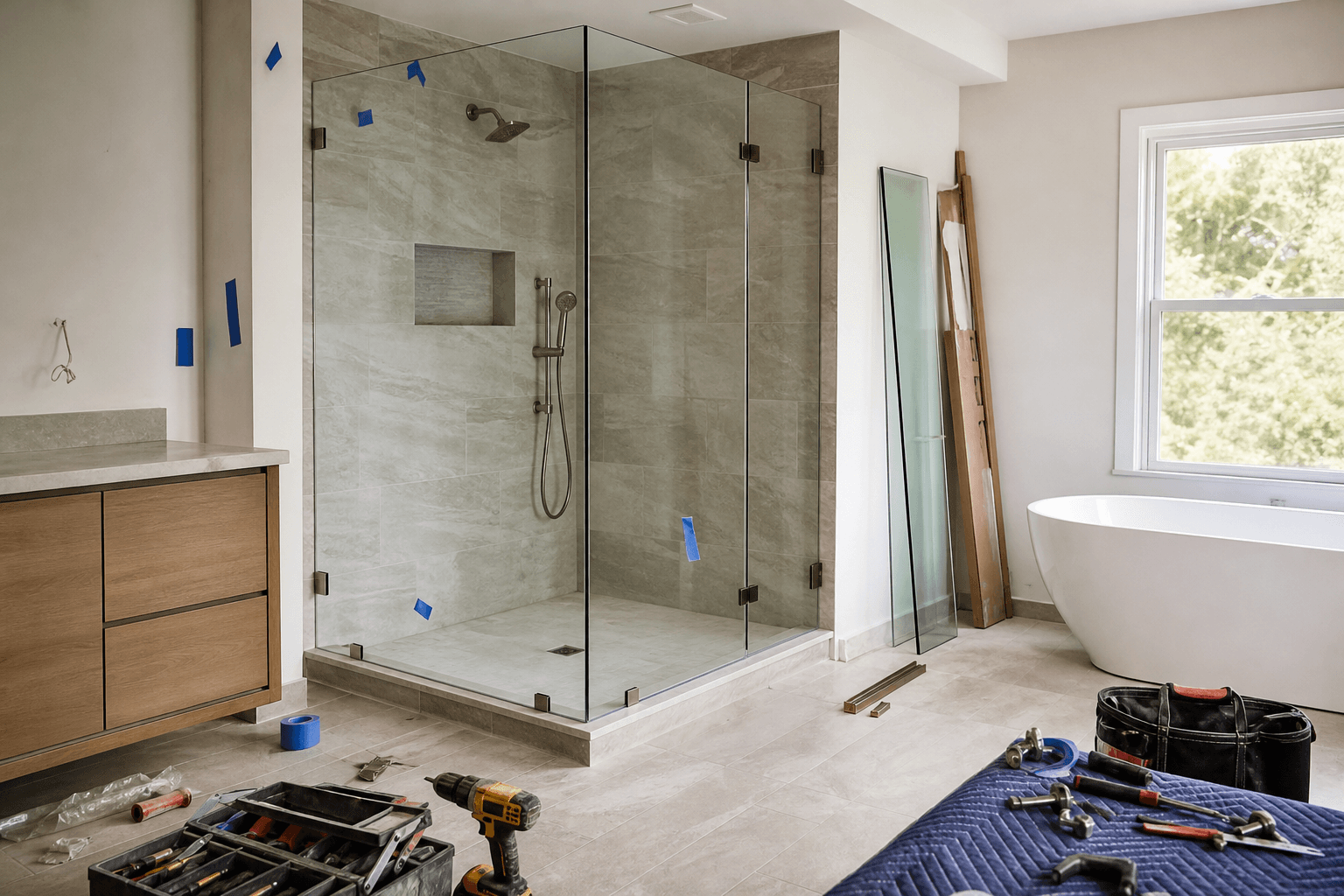
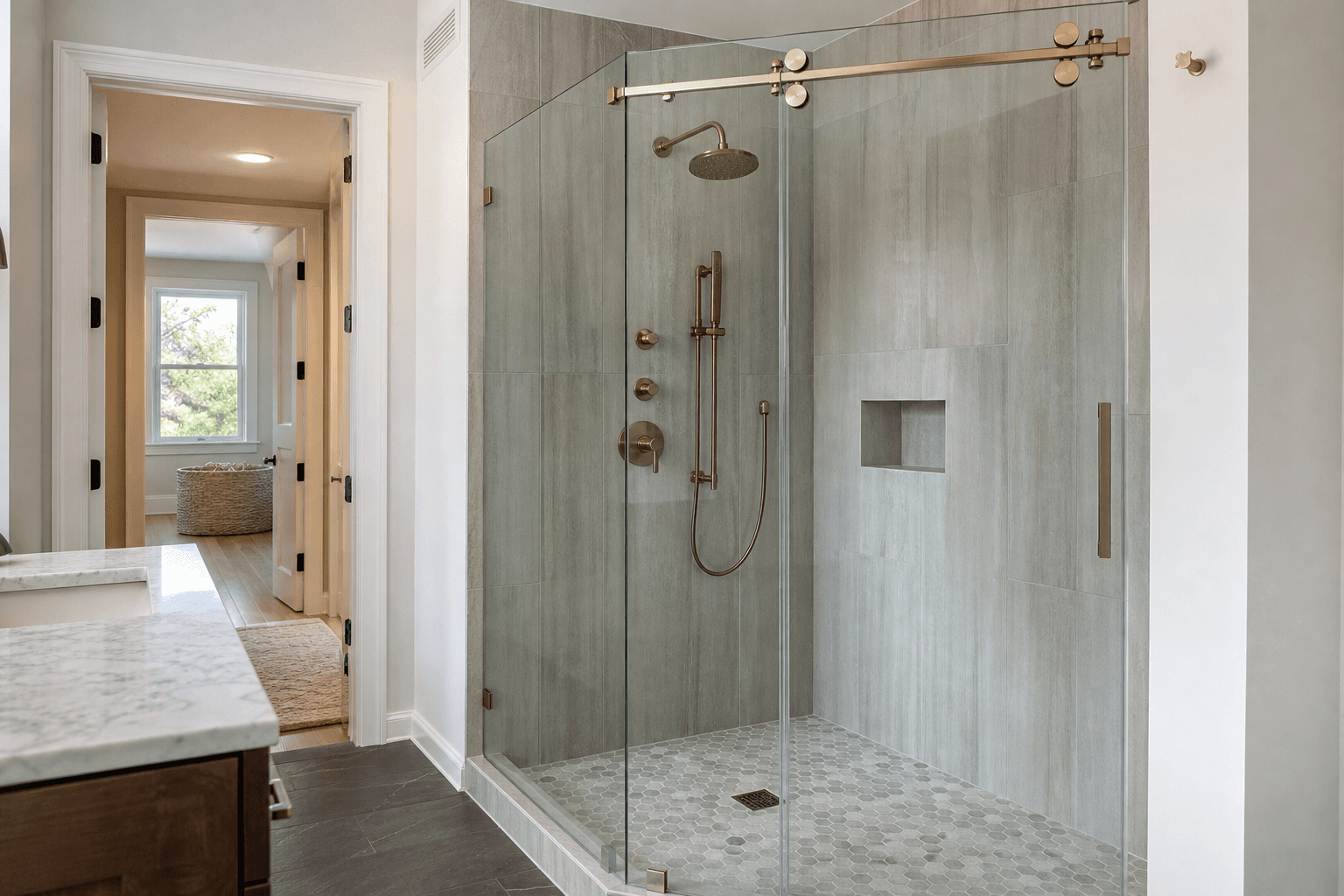
A frameless enclosure keeps water in through several parts working together, not through any single seal. The fitted glass does most of the work: panels made to your shower's measurements form the barrier that spray hits and runs down. Because a door has to open and close, there are small gaps where glass meets glass, wall or base. The other parts exist to manage those gaps.
Alignment means the door reaches the closing position it was designed for. A door that hangs true lines up with the fixed panel or wall, and the gaps stay as even as intended. If the door settles out of that position, one side can open wider than the other, giving water an easier way out.
Seals handle the gaps that remain. A bottom sweep is the sealing strip along the door's bottom edge, and it slows water running down the glass toward the floor. Side seals do a similar job along the vertical edges.
The shower base completes the system. When the base drains inward, water heads toward the drain instead of pooling against the door line, so the seals deal with drips and runoff rather than standing water. If one part is weak, the others carry more of the load.
That is why a frameless door is better described as designed to contain ordinary shower water than as a watertight box. How well it does that depends on how the glass, seals, base and spray placement suit each other in your particular shower, and no seal can promise the same result for every layout or spray angle.
Choose the layout around spray and drainage
Where water lands during an ordinary shower has a lot to do with how well the enclosure keeps it in. Seals cope far better with water running down the glass than with water aimed straight at the door edges or hinges. Point a shower head or body spray at the opening, and water can push through those gaps even after extra seals go on.
One glass supplier warns that add-on polycarbonate seals do not hold up against direct spray around the door and hinges. That is the supplier's caution, not a tested rating for every seal on the market, but the practical point stands: a seal is a backup for sensible spray placement, not a substitute for it.
Some layouts therefore put a fixed glass panel opposite the body sprays. The panel takes the spray and deflects it back into the shower, away from the gaps around the door. Where the door sits relative to the spray, and which way it opens, can matter as much as the seals, which is worth remembering if you are weighing sliding versus swinging shower doors.
You do not have to work this out yourself. Describe the shower you want, how you use it and how easy it should be to step in and out. The contractor looks at spray placement, dimensions, drainage and which enclosure suits the space. Star Glass LLC lists custom swing, sliding, corner and steam enclosures, but none of these styles should be assumed to contain water best without looking at the actual layout.
When you review a proposal for shower glass for bathroom remodels, ask one simple question: how will this layout limit the water reaching the door gaps?
Report where water appears, not a guessed cause
A shower that already leaks is a different problem from planning a new one. Water is already getting out, and the most useful thing you can offer is a plain description of what you notice during ordinary use, not a guess about the cause.
Helpful observations include where water shows up on the floor after a normal shower, whether it collects near a corner of the door or along a side gap, whether the bottom sweep has already been replaced and roughly when, and whether the door sticks, shifts or swings open when you don't expect it. You don't need to recreate the leak or test the door. What you have noticed day to day is enough.
The sweep history matters because the bottom edge is not the only place water can escape. In online discussions, homeowners have described water still pooling near a door corner or slipping through a side gap after a new sweep went on. Those accounts don't diagnose anyone's shower, but they show why replacing the most obvious part doesn't always end the problem.
Water on the floor may not come from the glass enclosure at all. A plumbing fault, a base that doesn't send water back toward the drain, a drainage problem or a failure in the waterproofing beneath the tile can leave water in similar spots. Telling these apart takes an in-person assessment.
A door that sticks, shifts or opens on its own is a separate concern. Don't adjust the hinges or handle the glass yourself, and have it professionally assessed before relying on it.
A new sweep or door is not the automatic fix
When water keeps escaping, the obvious move is to buy a new sweep or start pricing a replacement door. Sometimes that is right: a worn or poorly matched sweep or side seal can let water through, and a suitable replacement can help limit it. But seals only work as intended when they suit that particular enclosure and the door closes where it was designed to, so no single gap size or seal type fits every shower.
Some hardware systems also have small drainage openings, sometimes called weep holes, that let water drain back into the shower. These can become blocked. Not every enclosure has them, and an opening that looks like a gap may be doing a job, so it should not be sealed shut just because you can see it.
Working out what is actually going on is the contractor's job: checking whether the door is aligned, whether the hinges and other hardware are secure, what condition the glass is in and whether the wall behind the attachment points gives solid support. That assessment is what separates a seal problem from an alignment problem, or from one that is not in the enclosure at all.
Star Glass LLC's business profile lists repair of existing shower doors and enclosures along with installation and replacement, so repair can be part of the conversation before anyone assumes you need a new door. Whether your enclosure can be repaired, which brands are supported and whether parts are available depend on the project.
Plumbing, tile and the waterproofing beneath them are separate from the glass, and new glass will not cure a leak whose source has not been found. After an assessment, ask what was found and how the proposed repair or replacement deals with that specific finding.
What to share when arranging a Montclair assessment
Star Glass LLC serves Montclair, whether your home is a few blocks from Montclair Art Museum on South Mountain Avenue or on the other side of town. We offer custom frameless shower door installation as well as repair of existing enclosures, so a leaking or sticking door can start as a repair question.
When you get in touch, begin with the result you want: a new enclosure for a bathroom you are updating, or an existing door that stops leaving water on the floor. For an existing shower, add the everyday observations described above. Our quote form lets you attach optional photos of the work area, and ordinary phone pictures of the shower, the door and any spot where water collects are plenty.
You do not need to measure anything. Our website describes an in-home measuring visit, where measurements are taken and the glass, hardware and layout are assessed for your actual shower.
A few simple questions will help you understand any proposal. Is repair a reasonable option here, and if not, why not? What does the proposed work cover, and what falls outside it, such as plumbing or tile? Does this scope need any approvals, and who takes care of them?
Our frameless shower doors page shows the enclosure styles we install.
If you are in Montclair and want a second opinion on a frameless shower door, new or existing, you can call Star Glass LLC at (908) 410-0773 or use the quote form on our website to talk it through.
Common questions
How does a frameless shower door keep water in?
Through several parts working together. Glass made to your shower's measurements forms the main barrier, correct alignment keeps the door closing where it should, and seals such as a bottom sweep limit water through remaining gaps. A base that drains inward sends water toward the drain rather than the door line.
How do I stop water from coming under a frameless shower door?
A worn or poorly matched bottom sweep can let water through, and a suitable replacement may help. But water near the door bottom can also come from alignment, spray direction, the base or a source outside the enclosure. Note where it appears and have the shower assessed before buying parts.
Do frameless shower doors leak water?
They can. A frameless door is designed to contain ordinary shower water when the glass, alignment, seals, base and spray layout suit each other, but it is not a sealed box. Spray aimed at door gaps or hinges, a door out of alignment or unsuitable seals can all let water escape.
How big should the gap be in a frameless shower door?
There is no single right number. Door clearances depend on the enclosure's hardware, glass and seals, and the gaps are managed by seals suited to that system. Rather than measuring gaps yourself, mention any gap that looks uneven or lets water through, and let the contractor check it against the design.
Who can do frameless shower door repairs or adjustments?
A shower glass contractor who repairs existing enclosures can assess alignment, hardware, seals and glass condition. Star Glass LLC lists repair of existing shower doors and enclosures, though suitability and parts depend on the project. Avoid adjusting hinges or handling the glass yourself, especially if the door sticks or shifts.